Professional Footwear: A Complete Guide to Safety and Comfort
Index
- Introduction: The Foundation of Productivity and Safety
- The Science of Comfort: Anatomy and Ergonomics at Work
- Decoding the Standards: The Complete EN ISO Guide
- Active Safety: Toecaps, Insoles, and Materials
- Anti-Slip and Stability: The SRC Classification
- Sector by Sector: The Ideal Footwear for Each Profession
- Technological Innovation in Footwear Materials
- Maintenance and Durability: When to Replace?
- Conclusion: A Safe Step Towards the Future
1. Introduction: The Foundation of Productivity and Safety
When we think about a company's professional image, the focus often falls on the tunics, trousers, or jackets that make up the team's look. However, there's an element that, although sometimes less visible, is literally the support for the entire work operation: professional footwear.
Choosing the correct footwear goes far beyond aesthetics. It's a critical issue of Occupational Health and Safety (OHS). In Portugal, foot injuries and accidents due to slips or falls continue to represent a significant percentage of sick leaves. More than just complementing your team's uniforms, work shoes are essential Personal Protective Equipment (PPE) that directly influence employee fatigue, mood, and efficiency.
In this in-depth guide, we will explore the world of technical footwear, dissecting European standards, analyzing comfort technologies, and helping managers and professionals make informed decisions that protect their greatest asset: human health.
 View Collection: Professional Footwear
For a more comprehensive overview of workwear in Portugal, you can consult our Complete Guide to Professional Uniforms and Workwear, where we address the fundamentals of the sector.
2. The Science of Comfort: Anatomy and Ergonomics at Work
The human body is a complex machine, and the feet are its foundation. A professional who spends 8 to 12 hours on their feet—whether in an operating theatre, an industrial kitchen, or a construction site—subjects their skeletal structure to immense pressure.
The Cycle of Chronic Fatigue
Wearing inadequate footwear doesn't just affect the feet. The impact propagates through the body's kinetic chains:
- Feet: Plantar fasciitis, bunions, and calluses.
- Ankles and Knees: Overload on joints due to lack of shock absorption.
- Hips and Spine: Postural misalignment resulting in chronic lower back pain.
- Circulatory System: Difficulty in venous return, promoting varicose veins and a feeling of heavy legs.
The Importance of Weight and Breathability
Traditional safety shoes historically weighed almost a kilogram. Today, technology allows for the creation of robust protective footwear at half that weight. Every extra gram on the foot equates to additional kilos of load on the back by the end of the day.
For sectors where mobility is constant, such as nursing or cleaning, lightness is non-negotiable. Everlite Work Trainers, for example, were specifically designed to reduce this weight, while simultaneously offering a closed design for splash protection and efficient thermal management.
 View Product: Everlite Work Trainers
3. Decoding the Standards: The Complete EN ISO Guide
To ensure that footwear fulfills its protective function, the European Union has established rigorous standards. In Portugal, these standards are essential for compliance with hygiene and safety legislation. Understanding the "alphabet soup" of letters and numbers on labels is vital for making the right choice.
The two main standards are:
- EN ISO 20345: Safety Footwear (with a protective toecap resistant to 200 Joules).
- EN ISO 20347: Occupational Footwear (without impact-protective toecap, but with other specific features).
Categories of EN ISO 20345 Standard (Safety)
- SB (Safety Basic): The basic level. Features a protective toecap (200J) and an oil-resistant sole.
- S1: All of SB + closed heel + antistatic properties (A) + energy absorption in the heel (E). Ideal for dry environments.
- S1P: All of S1 + penetration-resistant midsole (P). Very common in warehouses and light logistics.
- S2: All of S1 + resistance to water penetration and absorption in the upper (WRU). Recommended for wet environments or kitchens.
- S3: The complete combination. All of S2 + penetration-resistant midsole + cleated outsole. This is the standard for civil construction and heavy industry.
For heavy industry and construction, where the risk of crushing or perforation is real, a model like the Force Safety Boot fits the most demanding categories, ensuring physical integrity in hostile environments. To learn more about combining these boots with high-visibility clothing, consult our article on High-Visibility Uniforms for Construction and Industry.
 View Product: Force Safety Boot
Categories of EN ISO 20347 Standard (Occupational)
Many professionals, such as doctors or waiters, do not require steel toecaps (which add weight), but they do need stability and hygiene.
- OB: Basic requirements.
- O1: Closed heel, antistatic, energy absorption.
- O2: O1 + water resistance.
4. Active Safety: Toecaps, Insoles, and Materials
Footwear protection has evolved dramatically. Previously, "steel toecap" was synonymous with thermal discomfort and excessive weight. Today, materials engineering offers superior alternatives.
Types of Protective Toecaps
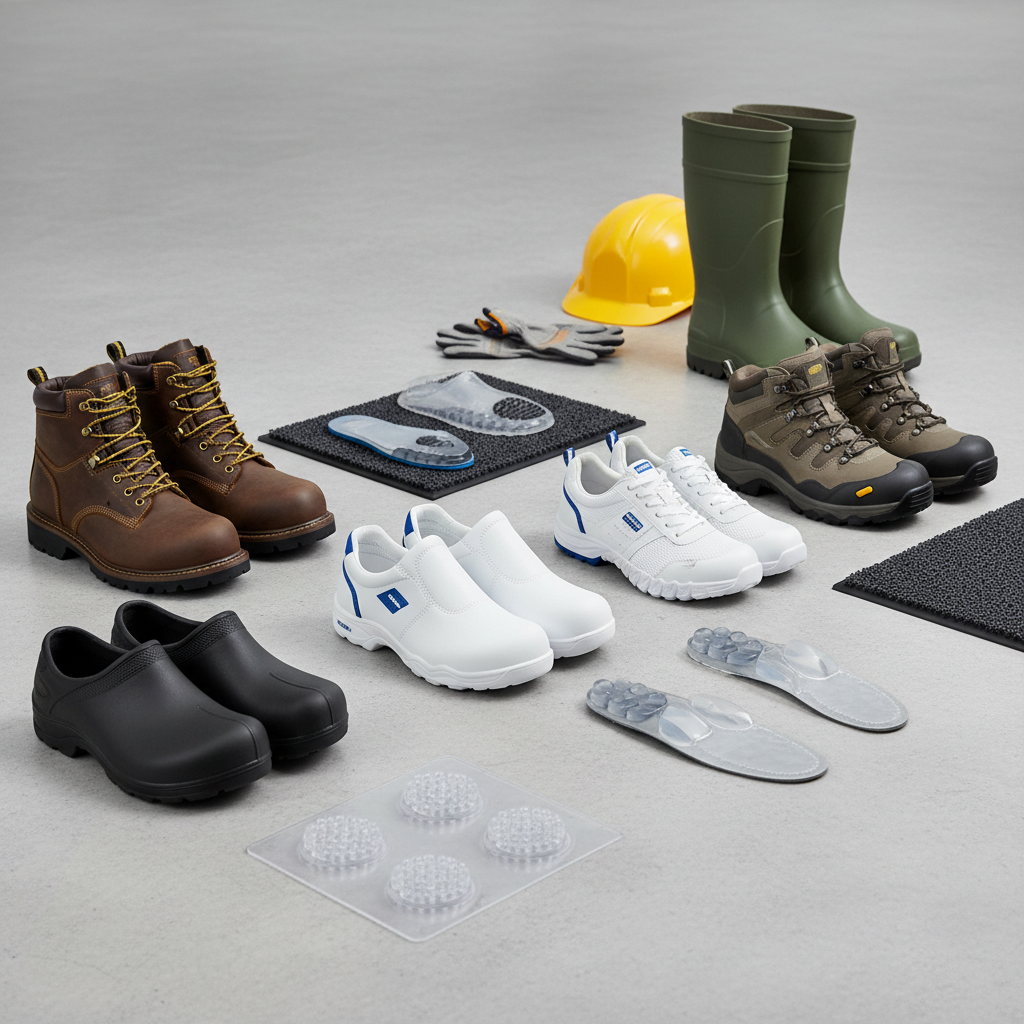
- Steel: The classic. Advantage: thinner for the same resistance, allowing for shoes with a more elegant design. Disadvantage: thermal conductor (cold in winter, hot in summer) and heavy.
- Composite: Made of ultra-resistant glass, carbon, or plastic fibers. Advantage: lightweight, non-magnetic (does not beep at airport or court metal detectors), and thermally insulating.
- Aluminum: An interesting compromise, offering the lightness of composite with the reduced thickness of steel.
Puncture Protection
On construction sites or in areas with glass/nails, underfoot protection is crucial.
- Steel: Metal insole inserted into the sole. Protects 100% against thin nails, but reduces walking flexibility.
- Kevlar/Textile: High-tenacity ballistic fabrics. Cover 100% of the foot's sole surface (unlike steel, which leaves margins), are more flexible and thermally insulating.
Electrostatic Protection (ESD vs Antistatic)
Many people confuse these terms.
- Antistatic (A): Dissipates electrostatic charges to prevent sparks that could ignite flammable substances. Essential for those dealing with fuels or solvents.
- ESD (Electro Static Discharge): A stricter standard. Protects sensitive electronic components (chips, circuit boards) from human body discharges. If you work on an electronics assembly line, you need ESD footwear.
5. Anti-Slip and Stability: The SRC Classification
Falls on the same level are the number one cause of accidents in kitchens, hospitals, and cleaning services. Sole grip isn't just about "having tread"; it's a science of friction tested in the laboratory.
The EN ISO standard defines three levels of slip resistance:
- SRA: Tested on ceramic tile flooring wet with detergent (Sodium Lauryl Sulfate). Essential for cleaning teams and hospitals.
- SRB: Tested on a steel surface with glycerine (oil). Crucial for mechanical workshops and some food industries.
- SRC (SRA + SRB): The gold standard. Footwear has passed both tests.
For professionals working on wet floors, with fluid or grease spills, choosing footwear with SRC certification is not optional, it is imperative. Models like high-quality hospital clogs or S3 safety boots almost always include this classification.
Beyond certification, the tread design (the shoe's "tire") matters. Wide channels help drain liquids, while nitrile rubber offers better chemical grip than simple polyurethane in certain oily environments.
To learn more about complementing foot safety with body protection, see our guide on Workwear and PPE: Safety Standards in 2025.
6. Sector by Sector: The Ideal Footwear for Each Profession
Every industry has unique challenges. What works for a carpenter will be disastrous for a nurse. Let's analyze the specific requirements.
Health and Medicine
In this sector, hygiene, ease of cleaning, and static comfort are king.
- Requirements: Washable at high temperatures (autoclavable), breathable, anti-slip, and antistatic (to avoid interfering with medical equipment).
- Star Product: The Bloc Open Hospital Clogs with Strap. Their monobloc design prevents bacteria accumulation in seams, the strap ensures the footwear doesn't come off in emergency situations, and lateral ventilation keeps the foot cool.
- Combination: Ideal when used with Healthcare, Medical, and Nursing Uniforms.
 View Product: Bloc Open Hospital Clogs with Strap
 View Collection: Healthcare Uniforms
Hospitality and Restaurants (HORECA)
Chefs and waiters cover miles daily between slippery floors and carpeted dining rooms.
- Kitchen: Requires protection against falling knives or hot pans (water-resistant microfiber), and maximum grip (SRC) against oils and greases.
- Dining Room/Reception: Style is important, but comfort cannot be neglected. Classic shoes with technical soles are the solution.
- Learn more: Uniforms for Restaurants and Hospitality: Elegance and HACCP.
Beauty, Wellness, and Spa
Image is everything, but posture also matters. Therapists and hairdressers work with their arms raised, which alters the center of gravity.
- Requirements: Quiet, elegant, lightweight, and easy-to-clean footwear (paints and chemicals).
- Suggestion: Lightweight clogs or minimalist technical trainers that match the Uniforms for Aesthetics, Spa, and Hairdressers.
Industry and General Services
Robustness reigns here.
- Construction: S3 mandatory.
- Cleaning: Water and aggressive chemical resistant footwear. See more in Uniforms for Cleaning and General Services.
 View Collection: Protective Clothing and PPE
7. Technological Innovation in Footwear Materials
Leather continues to be a noble, durable, and breathable material, but new competitors have emerged in the professional footwear market that deserve attention.
Steri-Tech™ and Advanced Polymers
Materials like Steri-Tech (used by the WOCK brand) are high-quality polymers that allow for autoclave sterilization up to 134 °C. This is revolutionary for surgical environments where absolute sterility is required. Furthermore, they are immune to corrosion from blood, lactic acid, or strong detergents.
Technical Microfiber
Often confused with cheap synthetic leather, high-quality technical microfiber is superior to leather in several aspects:
- Water-repellent: Repels water better than untreated natural leather.
- Washable: Can often be machine-washed (at 30/40 degrees), which is impossible with leather.
- Lightweight: Significantly reduces the weight of the shoe.
- Sustainability: It is a vegan option and often more ecological. Learn more about ecological options in our article on Sustainable Uniforms.
Cushioning Technologies
EVA (Ethylene Vinyl Acetate) or dual-density PU (Polyurethane) midsoles are injected to create differentiated absorption zones. The heel receives a density to absorb the impact of the stride, while the forefoot has a different density for propulsion.
8. Maintenance and Durability: When to Replace?
Professional footwear, like uniforms, has a lifespan. Wearing worn-out footwear is as dangerous as not wearing protection.
Warning Signs for Replacement:
- Toecap Damage: If the steel or composite toecap is exposed (the leather has torn) or has suffered a strong impact (something heavy fell on it), the internal structure may be compromised. It should be replaced immediately.
- Smooth Sole: If the tread has disappeared, the SRC certification is no longer valid. The risk of falling increases exponentially.
- Heel Counter Deformation: If the shoe's heel counter is "flattened" or deformed, ankle alignment is at risk, which will lead to medium-term injuries.
- Internal Wear: If the inner lining is torn, it can cause blisters and wounds, becoming an entry point for infections.
Maintenance Tips:
- Rotation: The ideal is to have two pairs of work shoes and alternate them daily. This allows accumulated moisture inside (sweat) to dry completely, preventing fungi and bad odors.
- Regular Cleaning: Remove daily dirt. For leather footwear, moisturize with balm. For polymers, wash with water and neutral soap.
- Drying: Never dry work footwear near direct heat sources (heaters, fireplaces), as this dries out the leather and weakens the sole's adhesives. Allow to air dry at room temperature in a ventilated area.
9. Conclusion: A Safe Step Towards the Future
Investing in quality professional footwear is not an expense; it is a smart human resources and safety management strategy. The right pair of shoes reduces absenteeism, boosts team morale, and prevents accidents that can cost companies thousands of euros and cause unnecessary suffering to workers.
At RAG Tailor's, we understand that every profession has its "footprint." Whether through the lightness of Everlite sneakers, the hygiene of Bloc Open clogs, or the robustness of Force boots, our mission is to ensure that every step taken by your team is a safe step.
When selecting equipment for your company, remember to look down before looking ahead. Safety starts with your feet. Explore our full range and find the perfect solution that combines the most demanding standards with the comfort your employees deserve.
For an integrated approach to your company's image, be sure to read about Corporate Uniforms: Professional Image for Companies and discover how to align footwear with your brand's visual identity.