Sustainable Uniforms: Eco-friendly and Recycled Fabrics

- The New Era of Professional Apparel in Portugal
- Organic Cotton: The Natural Revolution for Skin
- Recycled Polyester (rPET): From Waste to Corporate Luxury
- The Impact on Corporate Social Responsibility (CSR)
- Economic Advantages and Long-Term Durability
- Employee Health and Well-being: The Invisible Factor
- Sectors Leading the Ecological Transition
- Essential Certifications: GOTS, Oeko-Tex, and GRS
- Implementation Guide: How to Switch to Eco-Friendly Uniforms
- Conclusion
1. The New Era of Professional Apparel in Portugal
The Portuguese market is witnessing a paradigm shift. If in the past a uniform was merely seen as a standardization tool, today it is an extension of a company's values. Sustainability in professional apparel, or "eco-farding," is not a passing trend; it is a structural requirement of a European market moving towards carbon neutrality.
Portuguese companies, from luxury hotels in the Algarve to tech startups in Lisbon and Porto, are realizing that the modern consumer "reads" a brand through its details. A team equipped with eco-friendly apparel communicates innovation, care, and responsibility.
This trend is driven by three main factors:
- European Legislation: Increasingly strict directives on the circular economy and textile waste management.
- Consumer Demands: Studies indicate that over 60% of Portuguese consumers prefer brands with sustainable practices.
- Talent Retention: New generations of employees value employers who demonstrate active environmental concern.
This article is a specialized complement to our Complete Guide to Professional Uniforms and Apparel in Portugal, where we gather the best practices and standards in the sector.
2. Organic Cotton: The Natural Revolution for Skin
Organic cotton represents a return to origins with the technology of the future. Unlike conventional cotton, whose cultivation is responsible for a significant percentage of global pesticide and insecticide use, organic cotton is grown without toxic chemicals.
Direct Benefits of Organic Cotton in Uniforms:
- Reduced Water Footprint: Organic farming uses methods that retain water in the soil more efficiently, consuming significantly less water resources than conventional farming.
- Fiber Durability: Without the harshness of strong chemicals during processing, the cotton fiber remains more intact and resistant, ensuring the uniform lasts longer, even after frequent industrial washes.
- Hypoallergenic: For teams who wear uniforms 8 to 10 hours a day, the absence of chemical residues is crucial to prevent skin irritations and allergies.
A practical example of how this fiber can be applied in restaurant and service environments is the apron. An organic cotton apron not only protects the user but also elevates the visual presentation, offering a more natural and sophisticated touch.

View Product: Organic Cotton Apron
The texture and drape of organic cotton are superior, conveying a premium image. This is particularly relevant in sectors where customer contact is close and constant.
3. Recycled Polyester (rPET): From Waste to Corporate Luxury
While organic cotton reigns in natural comfort, recycled polyester (rPET) is the king of technical performance and waste management. rPET is obtained through the recycling of existing plastics, mainly water bottles (PET) and fishing nets collected from the oceans.
The Transformation Process
The process is fascinating and technological:
- Collection and cleaning of plastics.
- Shredding into small flakes.
- Melting and transformation into pellets.
- Extrusion to create high-strength yarns.
- Weaving of new fabrics.
Advantages of rPET in Uniforms:
- Waste Reduction: Each T-shirt or polo made from rPET removes several plastic bottles from the environment.
- Lower Energy: The production of recycled polyester consumes up to 59% less energy than the production of virgin polyester.
- Performance: It retains all the characteristics of traditional polyester — quick-drying, wrinkle resistance, color durability, and easy ironing.
For dynamic teams who need lightweight and breathable clothing, recycled T-shirts are the ideal solution. They combine the robustness required for daily work with the lightness of a technical fabric.

View Product: Unisex Recycled T-Shirt 160 G Rag
This technology allows sectors such as industry, logistics, and even corporate events to dress their teams with pride, knowing that each piece actively contributes to cleaning the planet. To learn more about safety wear and standards, consult our guide on Workwear and PPE: Safety Standards in 2025.
4. The Impact on Corporate Social Responsibility (CSR)
The adoption of sustainable uniforms is one of the most visible ways to materialize an organization's CSR policy. Many companies invest millions in green marketing campaigns but fail in the basics: internal consistency.
When a customer enters an establishment and sees a sign saying "Our team wears the future: 100% eco-friendly uniforms," an immediate emotional connection is created. This narrative is powerful because it is tangible.
Brand Valuation (Branding):
- Differentiation: In a saturated market, being "the green company" is a factor of competitive distinction.
- Narrative (Storytelling): Uniforms become a talking point. Employees are proud to explain that their uniform was made from recycled materials.
- Consistency: Aligns the visual image with sustainability reports, avoiding accusations of greenwashing.
For colder climates or more casual office environments, incorporating pieces like eco-friendly sweatshirts demonstrates that sustainability does not compromise comfort or style.
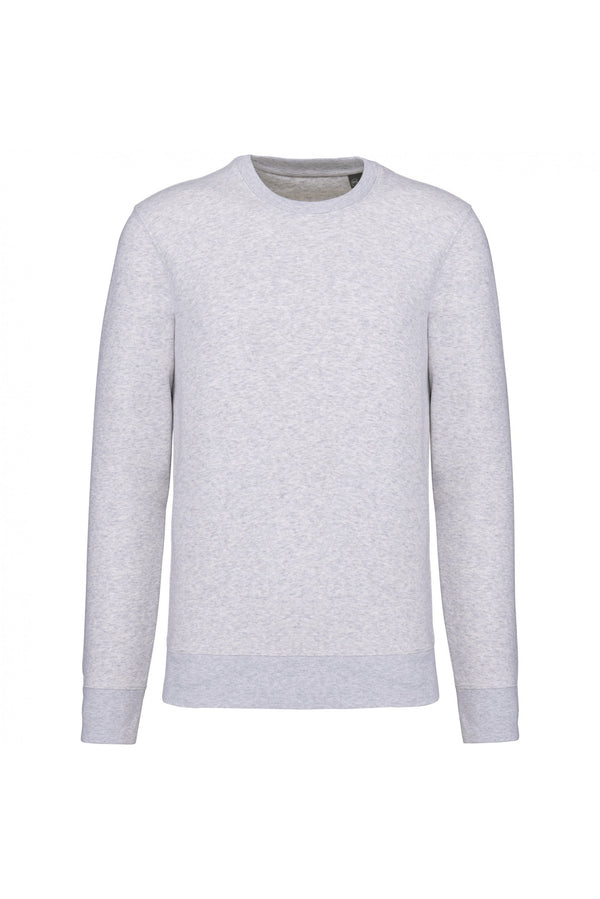
View Product: Unisex Eco-Friendly Sweatshirt
5. Economic Advantages and Long-Term Durability
One of the most common myths is that sustainable clothing is prohibitively more expensive. While the initial cost may be slightly higher than industrial fast fashion, the analysis should be done through the Total Cost of Ownership (TCO).
Cost-Benefit Analysis:
- Extended Life Cycle: Higher quality fabrics, such as long-staple organic cotton and high-density rPET, better resist abrasion and frequent washing. This means companies need to replace uniforms less often.
- Lower Maintenance Cost: Many eco-friendly blends are designed for low-temperature washing, saving energy in industrial or domestic laundries.
- Intangible Value: The return on brand reputation and employee satisfaction, while difficult to quantify in immediate euros, is reflected in customer loyalty and team retention.
By investing in high-quality uniforms, the company avoids the vicious cycle of "buy cheap, buy twice."
6. Employee Health and Well-being: The Invisible Factor
Thermal and tactile comfort are fundamental for productivity. An employee who feels uncomfortable, with excessive heat or itchy fabrics, will perform less well and have a less welcoming body posture towards customers.
In the healthcare sector, for example, where shifts are long and demanding, fabric breathability is a matter of hygiene and safety. Uniforms made with ecological materials and natural antibacterial treatments offer additional protection.
To delve deeper into this specific topic, we suggest reading Uniforms for Health, Medical, and Nursing: Antibacterial Fabrics, where we explore how textile technology protects those who protect us.
7. Sectors Leading the Ecological Transition
The transition to ecological fabrics is happening at different speeds, but three sectors stand out in Portugal:
A. Hotels and Restaurants (Horeca)
This is Portugal's "showcase" sector. With tourism increasingly focusing on ecotourism and sustainable tourism, hotels and restaurants cannot fail in presentation. From the chef's apron to the reception shirt, everything communicates. To learn more about the elegance required in this sector, see: Uniforms for Restaurants and Hotels: Elegance and HACCP.

View Collection: Professional Apparel for Hotels and Restaurants
B. Wellness and Aesthetics
Spas, hairdressers, and aesthetic centers essentially sell care and nature. Using low-quality synthetic uniforms contradicts the message of "natural treatment." Tunics in organic cotton or soft recycled blends are the logical choice. Related article: Uniforms for Aesthetics, Spa, and Hairdressers: Elegance and Comfort.
C. Education and Teaching
Schools are the cradle of environmental education. Modern educational institutions are adopting school uniforms made from sustainable materials to instill these values in students from an early age. Learn more at: School Uniforms and Education: Fun and Comfortable.
8. Essential Certifications: GOTS, Oeko-Tex, and GRS
To ensure you are truly buying "sustainable" and not just "marketing," it is crucial to know the acronyms that validate the quality and origin of fabrics. At RAG Tailors, we prioritize certified partners and materials.
- GOTS (Global Organic Textile Standard): This is the gold standard. It guarantees that the fabric contains at least 70% organic fibers, that no harmful chemicals were used at any stage, and that workers' rights were respected.
- Oeko-Tex Standard 100: Ensures that the final product is free from substances harmful to human health. It is essential for items that are in direct contact with the skin.
- GRS (Global Recycled Standard): Verifies the recycled content of products (such as rPET polyester) and tracks it from recycling to the final product, also ensuring good social and environmental practices.
By choosing uniforms with these foundations, your company protects itself legally and ensures the promised quality.
9. Implementation Guide: How to Switch to Eco-Friendly Uniforms
The transition does not have to be abrupt. It can be done in a phased and strategic manner. Here is a roadmap for managers:
Phase 1: Audit and Assessment
Evaluate the current inventory. Which pieces have the highest turnover? Generally, T-shirts and polos are ideal candidates for the first switch to recycled or organic versions.
Phase 2: Team Involvement
Consult employees. Explain the change. When the team understands that the new uniform helps the planet and is more comfortable, acceptance is immediate. Customization is also key here – prefer embroidery over plasticized prints to maintain ecological consistency. See options in: Custom Uniforms: Embroidery or Printing?.
Phase 3: Pilot Test
Acquire a small number of sustainable uniforms for a specific department. Collect feedback on comfort, wash resistance, and fit.
Phase 4: Communication
Don't make the change silently. Communicate to your customers. Use labels on uniforms that explain the fabric's origin (e.g., "This uniform saved 12 plastic bottles").
Phase 5: Recycling Old Uniforms
What to do with old uniforms? Do not throw them in undifferentiated waste. Look for textile recycling partners to close the loop.
10. Conclusion
Sustainability in professional apparel is no longer a futuristic vision; it is the operational reality of 2025. Companies that ignore this trend risk communicating obsolescence and lack of care.
Opting for ecological and recycled fabrics at RAG Tailors is a triple investment: in the planet, in employee dignity, and in brand reputation. Whether through the softness of organic cotton or the innovation of recycled polyester, your uniform can tell a story of responsibility and hope.
The question is no longer "how much does it cost to change?", but rather "what is the cost of not changing?".
Remember: The future of your company is dressed today.