Non-slip clogs for hospital use: safety and standards
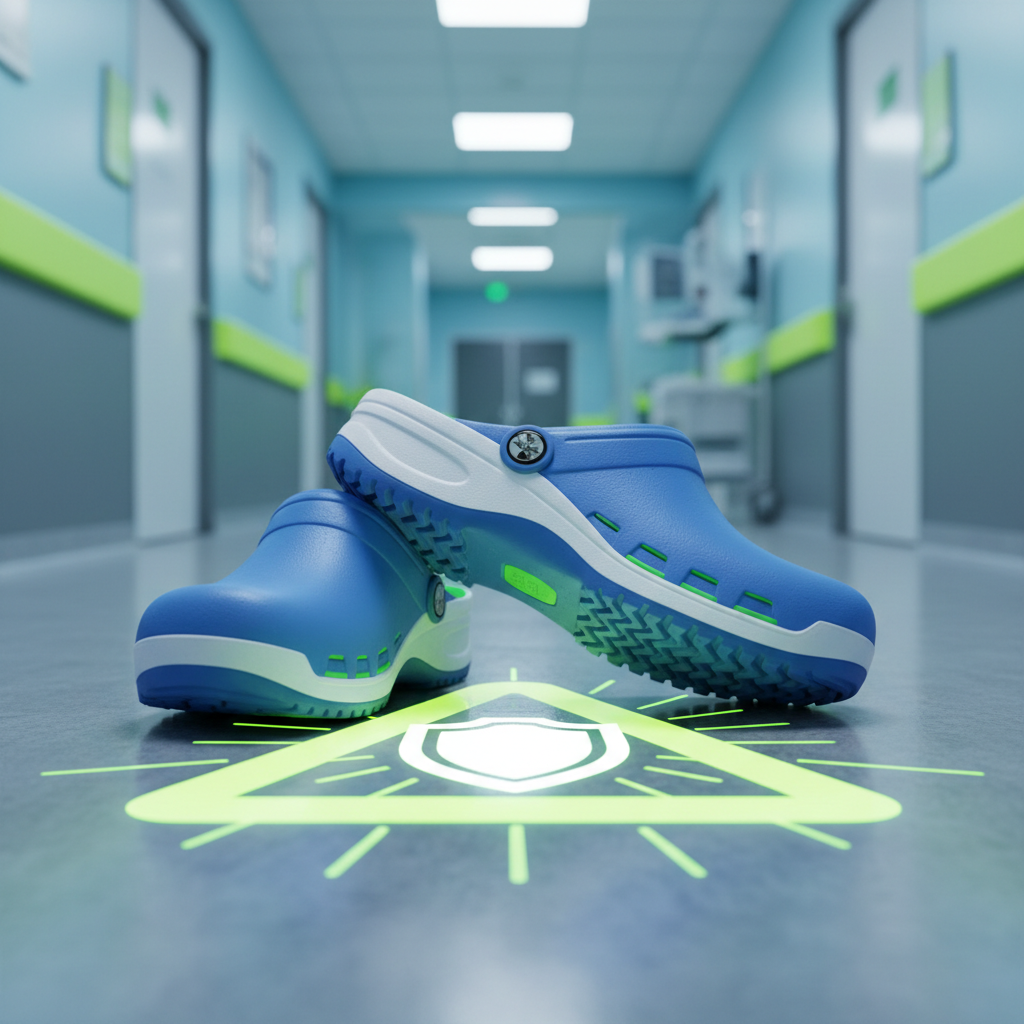
Imagine the scenario: a medical emergency, the pager beeps, adrenaline surges, and you need to rush down a freshly cleaned hospital corridor. In that split second, the last thing you should be thinking about is whether you’ll stay on your feet. Safety in professional footwear isn't a luxury; it's an absolute necessity that can define the outcome of a shift. Have you ever wondered if the clogs you currently wear truly meet the requirements to prevent serious accidents? In this technical and detailed article, we will delve deep into the world of grip, European standards, and the technology that keeps healthcare professionals firmly on the ground, literally.
For a comprehensive overview of the entire clinical footwear ecosystem, we highly recommend consulting our cornerstone article: Nursing and Hospital Clogs: Complete Guide. It's the ideal starting point before we focus specifically on anti-slip technology.
Table of Contents
1. The Critical Importance of Anti-Slip Clogs in Hospitals and Clinics
When we talk about hospital uniforms, we often focus our attention on the aesthetics of the tunic or the comfort of the trousers. However, the foundation of all work — literally — lies in the feet. Anti-slip clogs are not just an accessory; they are essential Personal Protective Equipment (PPE). In Portugal, work-related accidents involving falls on the same level (trips and slips) account for a significant portion of sick leave in the healthcare sector.
A slip in a hospital is not just an embarrassing moment. It can result in serious musculoskeletal injuries, fractures, spills of hazardous substances, or, in the worst-case scenario, compromise the safety of a patient being transported or assisted. Imagine carrying a medication tray or supporting a patient with reduced mobility and losing your balance. The consequences can be devastating.
Furthermore, the psychological stress of walking on "ice" (waxed or wet floors) creates constant muscle tension in the legs and back. The body, in an instinctive attempt to maintain balance, alters posture and gait, which, after a 12-hour shift, translates into lower back pain and extreme fatigue. Therefore, investing in hospital and nursing clogs with true anti-slip capability is investing in the long-term health of the professional.
2. Risks of Wet and Contaminated Floors in a Hospital Environment
The hospital environment is, by nature, a minefield for stability. Unlike a carpeted office or a retail store, hospitals constantly deal with fluids. We're not just talking about cleaning water; we're talking about blood, vomit, bodily fluids, saline solution, alcohol-based disinfectants, and potent enzymatic detergents.
Each of these liquids alters the floor's coefficient of friction differently. For example, a linoleum or vinyl floor (common in hospitals) becomes extremely slippery when combined with detergents. If we add to this the urgency — the need to run for a "Code Blue" or an emergency in the operating theatre — we have the perfect recipe for disaster.
Professional clogs are designed with these micro-scenarios in mind. The sole's geometry is not just for "grip"; it's for draining these fluids. The principle is similar to that of a Formula 1 car's rain tyres: the liquid needs to be channelled away from the contact area so that the rubber touches the ground and doesn't float on the liquid (aquaplaning).

3. Standards and Safety Requirements for Hospital Clogs
Here we enter the technical part that separates amateur footwear from professional. In the European Union, work footwear is governed by standard EN ISO 20347 (for occupational footwear, without steel toe cap) or EN ISO 20345 (for safety footwear, with protective toe cap). Most clogs for nurses and doctors fall under ISO 20347.
Within this standard, there are specific classifications for slip resistance. It is crucial that you know how to decipher these acronyms when buying your equipment:
| Classification | Test Performed | Safety Level |
|---|---|---|
| SRA | Tested on ceramic tile floor wet with detergent (Sodium Lauryl Sulfate). | Basic/Essential for cleaning and general nursing. |
| SRB | Tested on steel floor with glycerine (oil). | Specific for areas with oils or greases (e.g., kitchens). |
| SRC | Combines SRA + SRB tests. Passed both. | Maximum. The best choice for a versatile hospital environment. |
In addition to grip, there are other important acronyms in ISO 20347 that you should look for in your nursing clogs:
- A (Antistatic): Dissipates accumulated static electricity, essential for those working with sensitive electronic equipment or in operating theatres with flammable gases.
- E (Heel Energy Absorption): Reduces impact on joints with each step.
- OB: Basic standard requirements met.
An excellent option that strictly meets these standards are WOCK clogs. Observe this high-performance example:

WOCK BLOC OPEN HOSPITAL CLOGS with Strap
44.90 EUR
Ideal for operating theatres. Sterilizable and with advanced antistatic design.
View Product →4. Types of Soles and Most Effective Anti-Slip Patterns
Not all rubber is created equal. The effectiveness of WOCK® Clogs - Superior Quality Footwear lies in the engineering of materials and the tread design.
Sole Materials
Nitrile Rubber: This is the "gold standard" for slip resistance. It has superior natural grip and resists oils and chemicals well. However, it can be heavier.
EVA (Ethylene Vinyl Acetate): Extremely lightweight and comfortable, but on its own, it can be slippery on wet floors. The best EVA clogs incorporate a rubber insert in the sole to ensure traction (Grip technology).
PU (Polyurethane): An excellent balance between durability, lightness, and grip. Very common in "sabre" type safety footwear.
Tread Geometry (Pattern)
The design on the bottom of the clog is not decorative. Look for complex geometric patterns (hexagons or waves) with wide drainage channels. These channels allow water to be expelled to the sides when you step, ensuring that the sole effectively touches the ground. Very smooth soles or those with shallow designs create a film of water between the footwear and the floor, resulting in zero friction.
5. Differences Between Domestic Use Clogs and Certified Professional Clogs
This is one of the most common questions: "Can I wear those colourful beach clogs in the hospital? They're comfortable!" The short answer is: definitely not, if you value your safety and legal compliance.
Domestic or recreational clogs are made of soft materials (usually low-density EVA) focused only on immediate comfort and ventilation. They fail in critical areas:
- Lack of Certification: They do not pass ISO 20347 tests. In the event of a work accident, the insurer may refuse liability if you are not wearing certified footwear.
- Rapid Wear: The tread of these clogs wears out quickly on abrasive floors, becoming as smooth as glass within a few months.
- Static Electricity: They are rarely antistatic. A static shock can damage sensitive medical equipment or startle a patient.
- Superior Protection: They usually have holes on the top. If a needle or hot fluid falls, the foot is exposed. Professional clogs have reinforced upper protection or angled side holes to prevent fluid entry.
6. How to Verify if Clogs Meet Standards When Buying Online
Buying online offers convenience and variety, but requires extra attention. How can you be sure you're not buying a "pig in a poke"? Follow this quick checklist:
- Check the Technical Description: Explicitly look for "EN ISO 20347". If it just says "anti-slip" without mentioning the standard, be suspicious.
- Look for the SRC/SRA Code: The description should indicate the level of anti-slip protection.
- Trusted Brand: Opt for brands recognised in the medical sector, such as WOCK or Nursing Care, which design products specifically for this niche.
- Consult the Technical Data Sheet: Specialised stores often provide the certification PDF or a detailed table of characteristics.
- CE Mark: The product must have CE marking, indicating compliance with European safety regulations.

7. Suggestions for Anti-Slip Clogs for Different Roles
Each role in the hospital has different requirements. What works for a triage nurse may not work for a surgeon.
Nursing and Operational Assistants
They need resilience for many hours on their feet and agility to walk long distances. Comfort is king, but SRA or SRC grip is vital due to frequent corridor cleaning. Recommendation: Lightweight clogs with a back strap for added safety when walking fast.

Siroco Unisex Clogs
31.10 EUR
Extreme lightness and anti-slip sole. Perfect for long nursing shifts.
View Product →Operating Theatre
Here, sterilisation is the priority. Clogs must be autoclavable (resistant to high temperatures) and obligatorily antistatic to avoid interfering with life support equipment. The WOCK BLOC OPEN HOSPITAL CLOGS with Strap model is a classic in this environment.
Hospital Canteen and Kitchen
In this area, the danger comes from oils and fats, in addition to water. It is imperative to wear footwear with an SRC or at least SRB rating (glycerine/steel test). Closed-front clogs are essential to prevent burns from hot liquids.
8. Good Maintenance Practices to Keep the Anti-Slip Sole Effective
You bought the best clogs on the market, but after 6 months, you feel like they're slipping. What happened? Often, the problem is maintenance.
The grooves of the anti-slip sole work by draining liquids. If these grooves become clogged with compacted dirt, food debris, lint, or dried residues, the sole becomes smooth and loses its function. To maintain safety:
- Daily Cleaning: Check the sole at the end of each shift. Use a stiff-bristled brush and warm water to remove debris from the sole's channels.
- Proper Washing: If the clogs are machine washable, observe the maximum indicated temperature (usually 30ºC or 50ºC, except for autoclavable ones). Excessive temperatures can deform the rubber and alter its grip properties.
- Wear Inspection: Just like car tires, clogs have a lifespan. If the sole's pattern is becoming "bald" or if you notice the rough texture is polished, it's time to replace them. Don't risk your safety to save on a new pair.
Safety in hospital work starts at the foundation. Choosing nursing or medical clogs with the correct certification is not just a bureaucratic obligation; it's an act of self-care. Ensure your feet are protected so you can focus on what truly matters: caring for others.