Workwear and Uniforms in Portugal: A Complete Guide
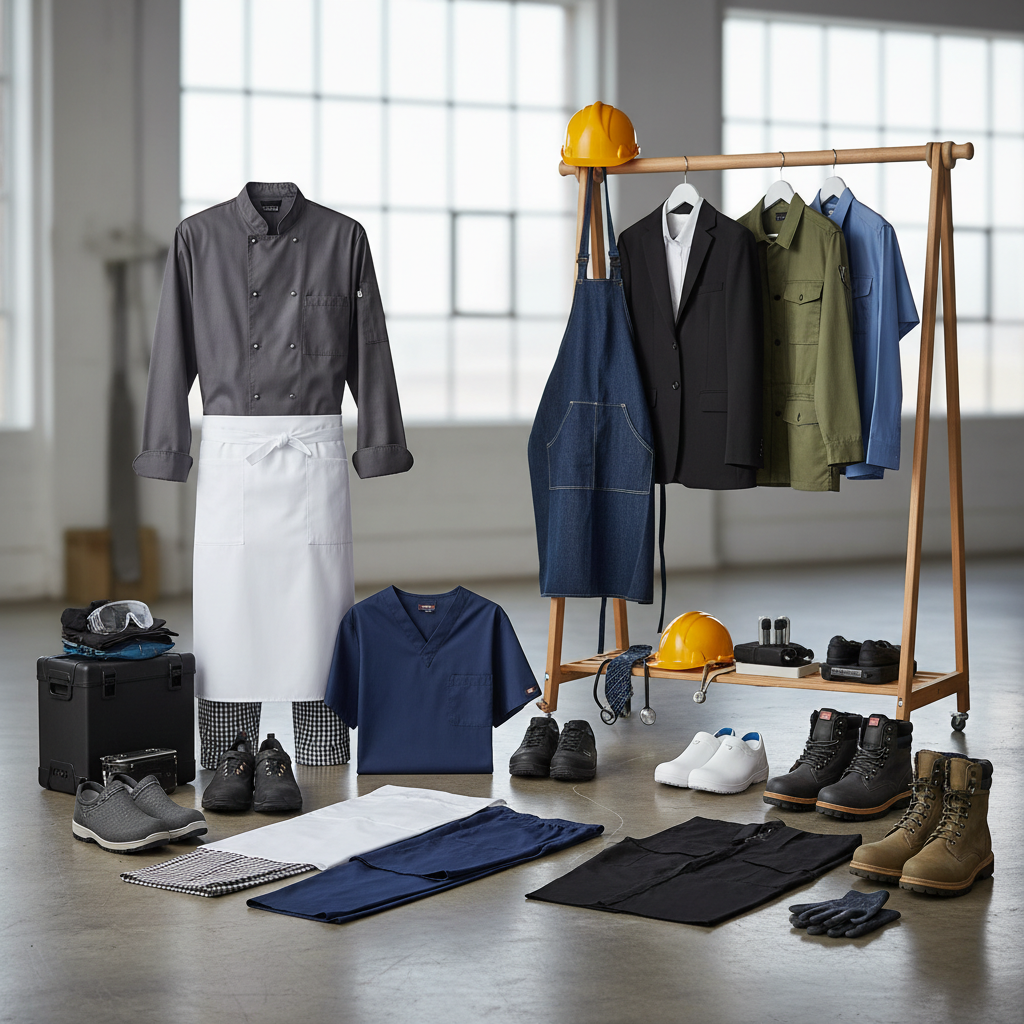
In the Portuguese business world, first impressions are not just important; they are often definitive. Whether you're managing a prestigious clinic in Lisbon, a boutique hotel in the Douro, or a logistics team in the industrial area of Porto, what your team wears communicates your brand's values in seconds.
But professional workwear goes far beyond aesthetics. It is a work tool, Personal Protective Equipment (PPE), a legal requirement, and, crucially, a significant financial investment. For years, RAG Tailors has navigated this complex ecosystem, helping companies balance design, comfort, safety, and budget.
This guide is a manual designed for managers, purchasing decision-makers, and team leaders who need to make informed choices. We will break down the science of fabrics, translate ACT legislation, explore tax benefits, and present concrete sectoral solutions.
Prepare to master the topic of professional workwear and uniforms in Portugal.
Index of the Definitive Guide
Navigate through the essential chapters for your company:
- The Corporate Image Strategy
- Legislation, Standards (ACT) and Taxation
- The Science of Fabrics: The Technical Guide
- Sectoral Solutions: Health, HORECA and Industry
- Professional Footwear: The Basis of Ergonomics
- Personalization: The Power of the Brand
- Size and Order Management
- Life Cycle and Maintenance
1. The Corporate Image Strategy: The Invisible ROI
Many managers still view workwear as a necessary operational expense, an "annoying" line item in the annual budget. This is a narrow view that ignores the tangible and intangible return on investment (ROI) that a good corporate uniform program brings.
Client Psychology
In a commercial interaction, trust is the most valuable currency. Before your employee opens their mouth, the client has already judged them. A misaligned, faded, or inappropriate uniform screams "sloppiness." In contrast, well-maintained workwear communicates competence, hygiene, and organization.
In sectors where technical trust is critical — think dental clinics, precision mechanics workshops, or private security — the uniform is not just clothing; it is a visual certificate of authority. The client feels more secure and less likely to question prices or procedures when the professional in front of them "looks" like the expert they claim to be.
Internal Cohesion and "Team Spirit"
The internal impact is equally powerful. The uniform is a social equalizer. It eliminates pressures regarding personal clothing and socioeconomic distinctions within the team. When everyone wears the same "jersey" (literally), it fosters a sense of belonging and shared responsibility. It transforms a group of individuals into an identifiable team.
2. The Portuguese Context: Legislation, Standards, and Taxation
Operating in Portugal requires knowing the rules of the game. The Authority for Working Conditions (ACT) is clear in its requirements, and the Tax Authority has specific rules for the treatment of these costs.
The Vital Distinction: Uniform vs. PPE
The most common mistake is confusing these two concepts, which can lead to heavy fines.
Work Uniform
Objective: Company identification, visual standardization, and protection of the worker's personal clothing.
Examples: Hotel receptionist suit, polo shirt with logo in a store, waiter's apron.
Legislation: Use can be imposed by the company (internal regulations).
PPE (Personal Protective Equipment)
Objective: Protect the health and safety of the worker against specific risks.
Examples: Steel-toed footwear, high-visibility vests, cut-resistant gloves, flame-retardant suits.
Legislation: Mandatory by law. The employer must provide it free of charge and ensure its maintenance.
Navigating European Standards (EN)
When purchasing PPE, it's not enough for them to "look safe." They must be certified. Always look for the CE marking and specific standards:
- EN ISO 20471: Crucial for work on public roads or construction sites. Defines the minimum area of fluorescent and reflective material for high visibility.
- EN ISO 11612: For those working exposed to heat and flame (e.g., welders, metallurgical industry).
- EN 14126: Protective clothing against biological agents (essential in certain hospital or laboratory environments).
For an in-depth analysis of the standards that will come into force, consult our article on Workwear and PPE: Safety Standards.
Fiscal Intelligence: VAT and IRC in Portugal
For companies, workwear can be fiscally efficient if managed correctly.
For IRC (Corporate Income Tax): Expenses with uniforms are accepted as 100% operational costs, provided they are of mandatory use and, crucially, have brand identification (visible logo, specific pattern). Generic suits without personalization can be considered "in-kind remuneration" and taxed differently.
For VAT: The VAT incurred on the acquisition of properly characterized workwear is, in most cases, deductible. (Note: We always recommend validating with your Certified Accountant for the specific framework of your activity).
3. The Science of Fabrics: The Technical Guide for the Portuguese Climate
Portugal has a deceptive climate. A summer in Alentejo reaches 40ºC, demanding maximum breathability, while a winter in Porto is humid and cold, requiring insulation and water resistance. Choosing the wrong fabric ensures uncomfortable, complaining, and less productive employees.
The Battle: Natural vs. Synthetic Fibers
There is no universal "best fabric." There is the right fabric for the right function. The secret is to understand the grammage (fabric weight per square meter) and composition.
| Material/Composition | Technical Advantages | Disadvantages and Limitations | Ideal Use in Portugal |
|---|---|---|---|
| Cotton (100%) | Excellent breathability, soft touch, hypoallergenic, does not accumulate static electricity. Superior thermal comfort in heat. | Hydrophilic (absorbs moisture and takes time to dry), wrinkles easily, shrinks at high temperatures, loses color with aggressive washing. | Premium medical coats, public service shirts, school uniforms and daycare centers. Air-conditioned indoor environments. |
| Polyester (100%) | Extreme resistance to tensile strength and abrasion, color fastness (does not fade), quick-drying, hardly needs ironing (Easy Care). | Lower breathability (can cause "greenhouse effect"), retains odors if not treated antibacterially, less natural feel. | Scullery aprons, cleaning uniforms (bleach resistant), outer jackets, high-visibility vests. |
| Polycotton (Mixed Twill) | The "workhorse." Combines the strength of polyester with the comfort of cotton. Good moisture management and industrial durability. | Can pill if fiber quality is low. | The standard choice for 80% of industries, nursing, maintenance, and catering. |
| Technical Fabrics (Elastane/Spandex) | Elasticity (Stretch) for total freedom of movement. Often includes liquid-repellent or antibacterial treatments. | Higher acquisition cost. Requires specific washing care not to damage elastic fibers. | Physiotherapists, dentists, hairdressers, aesthetic and spa professionals who need mobility. |
The Future is Sustainable
Corporate social responsibility has reached workwear. Portuguese companies are increasingly looking for options that reduce their ecological footprint. Sustainable uniforms use recycled polyester (rPET, made from plastic bottles) or closed-loop cellulosic fibers like Tencel™, which offer superior moisture management and are naturally antibacterial.
4. Sectoral Solutions: Health, HORECA, and Industry
Each sector has its specific "pains." RAG Tailors designs solutions that directly address these challenges.
A. Health and Aesthetics: Hygiene and Trust
In healthcare, the uniform is a barrier. The challenge is to ensure this barrier is effective against pathogens, without turning the professional into a "greenhouse" during 12-hour shifts.
- The Washing Challenge: Coats must withstand industrial washing at 60ºC or more to ensure thermal disinfection. Cheap fabrics shrink or degrade quickly under these conditions.
- The Revolution of Cut: The era of "potato sacks" is over. Modern healthcare professionals demand "Slim Fit" or "Athletic" cuts, with fabrics that incorporate elastane to allow squatting and stretching without restriction.
- Aesthetics and Spas: Here, chemical resistance is vital. "Bleach Resistant" fabrics (resistant to bleach and decolorizers) are essential for hairdressers and beauticians, preventing a black uniform from getting orange stains in the first week.
Explore our specialized range that combines technicality with modern design:

B. Hospitality and Catering (HORECA): Elegance and HACCP
This sector lives in two opposite worlds: the "front of house" (dining room/bar) which demands elegance, and the "back of house" (kitchen) which demands safety and resistance.
- Kitchen and HACCP: Chef jackets are not just about style. They must comply with food safety standards. This means hidden snap buttons (so they don't fall into food) and no external pockets above the waist. Fabrics with oil and grease repellent treatment are a huge bonus for maintenance.
- Dining Room and Trends: The apron has become the centerpiece. Models with crossed back straps ("Cross-back") are preferred by young teams, as they take the weight off the neck, distributing it across the shoulders, which makes all the difference after 8 hours of service. Materials like denim or canvas with synthetic leather details give an artisanal and premium touch to modern cafes and restaurants.
Discover solutions that balance standards with style:

C. Industry, Construction, and Logistics: Pure Resistance
In these environments, clothing is a tool that suffers constant abuse: abrasion, tears, heavy dirt, and bad weather.
- Multi-pocket Trousers: They are the worker's mobile office. They should have triple seams at stress points (crotch) and Cordura® or double fabric reinforcements at the knees, ideally with a compartment for knee pads.
- Visibility is Life: In warehouses with forklifts or road works, being seen is the difference between a normal day and a serious accident. High-visibility clothing must maintain its reflective properties even after multiple washes.
See our options for heavy-duty work:

View Industry and PPE Collection →
5. Professional Footwear: The Basis of Ergonomics
It is the most neglected element of the uniform and the biggest cause of sick leave due to musculoskeletal problems (lower back pain, plantar fasciitis, leg fatigue).
Safety vs. Comfort: The End of the Dilemma
Previously, safety footwear meant heavy, rigid boots. Today, technology allows for "Safety Trainers": sneakers that meet safety standards (composite toe cap, Kevlar anti-puncture midsole) but with the weight and flexibility of a running shoe.
EN ISO 20345 Standard Decoded
When purchasing safety footwear, always check the classification:
- SB (Basic Safety): Protective toe cap against 200J impacts.
- S1P: Ideal for logistics and light industry. Includes toe cap, closed heel area, antistatic properties, energy absorption in the heel AND anti-puncture midsole.
- S3: The top of the range for construction and outdoors. Everything S1P has, plus water penetration resistance in the upper.
- Non-slip (SRC): Essential for kitchens, hospitals, and cleaning. This means the shoe has been tested on ceramic tile with detergent and steel floor with glycerol.
To delve deeper into this critical topic, read our Complete Guide to Professional Footwear.

View Professional Footwear Collection →
6. Customisation: The Power of Branding
A uniform without a logo is just clothing. Customisation is what transforms it into a marketing asset and ensures corporate tax benefits. Our clients' eternal dilemma is: "Should I embroider or print?".
For a more in-depth analysis, read our dedicated guide: Embroidery or Printing? The Customisation Guide.
7. Size and Order Management: Avoiding the Logistics Nightmare
The biggest headache for purchasing managers is not choosing the fabric; it's getting the team's sizes right. Ordering uniforms online for 50 people can turn into a nightmare of exchanges and returns if there isn't a method.
The Golden Rule: Forget the "Zara Size"
The number one mistake is assuming that a "M" size from a casual fashion brand is the same as an "M" for a technical uniform. Professional clothing has different patterns, often designed to be worn over other clothes or to allow for greater freedom of movement.
How to Measure the Team Correctly
Don't ask employees for their size. Ask for their measurements or, ideally, provide a "fitting kit" (one item of each size for everyone to try on). If you have to measure:
- Chest/Bust: The most important measurement for tops (tunics, jackets, polo shirts). It should be measured at the widest part, with arms relaxed.
- Waist vs. Hips: For trousers, the waist is measured above the navel (narrowest area), but for low-rise or unisex cuts, the hip measurement (widest part of the buttocks) is often more decisive for comfort.
- The "Comfort Allowance": Workwear should not be "skinny". You should be able to place two fingers between the tape measure and the body. If the measurement is borderline between two sizes, always opt for the larger size to ensure mobility.
- The Unisex Factor: Many uniforms (especially in healthcare and kitchens) are unisex. These cuts are based on male morphology. Women should generally consider one size smaller than what they would wear in a women's garment, or carefully check the specific garment's size chart.
8. Lifecycle and Maintenance: Saving Money in the Long Run
The real cost of a uniform is not the purchase price; it's the cost per use over its lifespan. A €50 uniform that lasts two years is much cheaper than a €25 one that needs to be replaced every six months because it faded or tore.
The Employee Care Manual
If the company provides the uniforms but washing is the employee's responsibility, it is imperative to provide a care guide. The biggest cause of premature degradation is incorrect washing.
⚠️ The 3 Capital Mistakes in Washing:
- Excessive Temperature: Washing a cotton garment or one with printing at 90ºC will shrink it or destroy the logo. Always respect the label.
- Improper Use of Bleach: Using chlorine on fabrics that are not "chlorine-resistant" will weaken the fibre and cause yellow or pink stains.
- Mixing Loads: Washing a mechanic's uniform full of oil together with a customer service shirt will ruin both. Separation by type of dirt and colour is fundamental.
The "Rule of 3 Rotation"
To maximise durability, each employee should have, at a minimum, a kit of three changes: one in use, one being washed, and one "resting". Rest time is vital for the fabric fibres (especially elastic ones) to recover their original shape, avoiding the appearance of "baggy knees" or stretched fabric.
Conclusion: Uniforms as a Competitive Advantage
Investing in quality professional uniforms is not a sunk cost. It is a strategic decision that impacts the legal safety of your company, the motivation of your team, and the perception of your brand in the Portuguese market.
At RAG Tailors, we don't just sell clothes. We sell technical solutions that solve operational problems. We combine textile tradition with the innovation of new materials to ensure that your team is ready to face daily challenges, with comfort and safety.
Whether it's equipping a kitchen brigade of 50 people or a small aesthetic clinic, attention to detail in the fabric, pattern, and customisation will make all the difference. We are here to be your partner on this journey.
Ready to elevate your team's image?
Explore our specialized collections and find the perfect solution for your sector.