School Uniforms and Education: Fun and Comfortable | Guide
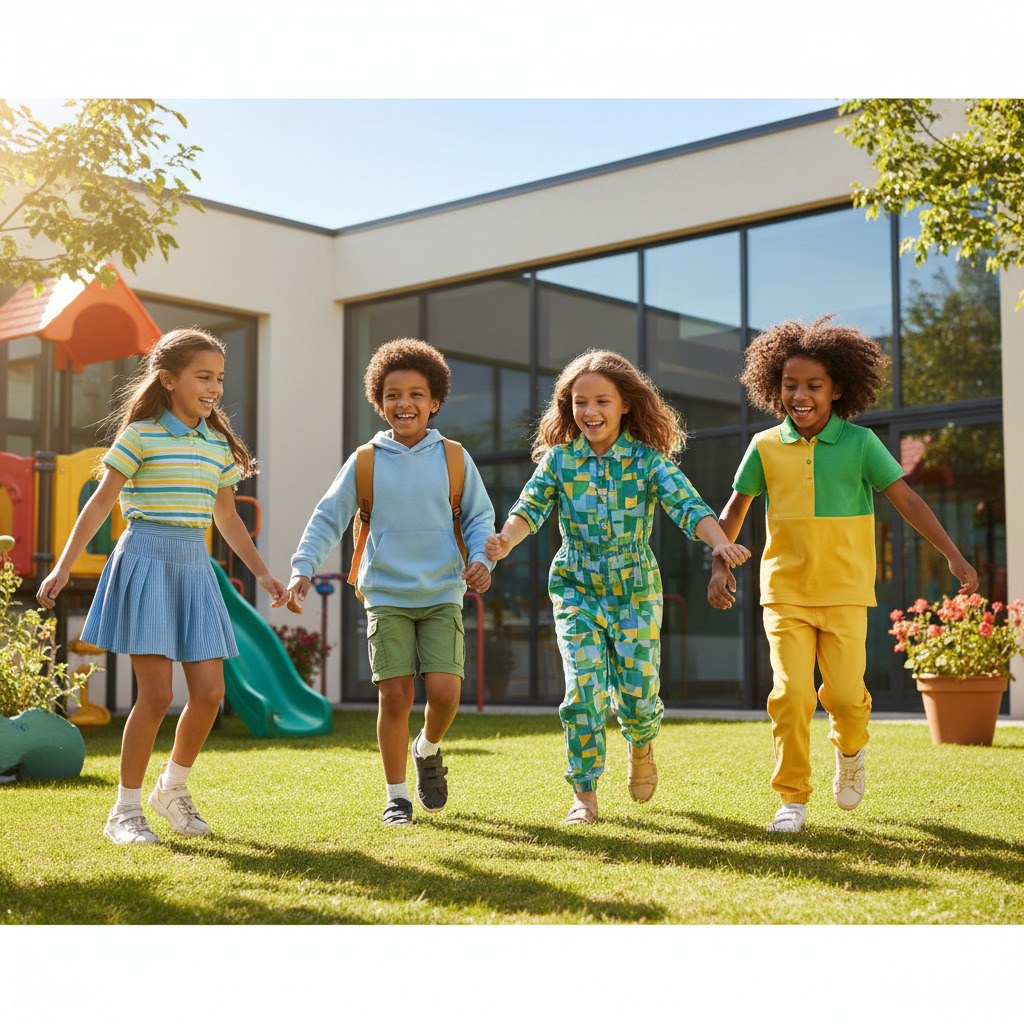
The school environment is a complex stage where the first major social interactions, cognitive development, and personality formation unfold. In this setting, clothing plays a much greater role than simply covering the body. School uniforms and professional attire for educators are non-verbal communication tools, vectors of equality, and instruments of safety.
When we talk about education, we often focus on curricula and infrastructure, forgetting that physical comfort – for both teachers and learners – is a prerequisite for concentration. A tight uniform, an itchy fabric, or a smock that doesn't adequately protect against paints in art class can become significant distractions.
Furthermore, standardization promotes a sense of belonging. For children, wearing a school smock or uniform is the ritual of transitioning from "home mode" to "learning mode." For educators, the uniform is a symbol of professionalism that establishes healthy boundaries and facilitates immediate identification by students and guardians.
At RAG Tailor's, we understand that creating these garments requires specific "savoir-faire," balancing the durability needed to withstand an active playground with the softness required by children's sensitive skin.
For a more comprehensive overview of workwear in Portugal, you can consult our Complete Guide to Professional Uniforms and Workwear, where we cover the fundamentals of the sector.
The Psychology of Colors and Design in Schools
The choice of colors and patterns in school clothing should not be random. Studies in color psychology indicate that certain shades influence behavior and mood. In the context of nurseries and kindergartens, the visual logic applied is different from that used in secondary schools.
- Vibrant Colors for the Youngest: Yellows, oranges, and light blues stimulate creativity and energy. This is why preschool smocks tend to avoid monotony, incorporating playful patterns, colorful plaids, and characters that children recognize.
- Sober Tones for Authority: For educators and assistants, colors such as navy blue, bottle green, or burgundy convey calm, confidence, and authority. However, modern design allows for "breaking" this seriousness with touches of color on pockets or collars, creating a bridge of accessibility with the student.
- The Institution's Visual Identity: The uniform is the school's first point of contact with the outside world. A carefully designed uniform reflects an organized institution that pays attention to detail.

View Collection: Professional Attire for Education
Attire for Educators: The Combination of Authority and Accessibility
Being an educator, teacher, or educational assistant is a physically demanding profession. Professionals spend a large part of the day standing, kneeling at children's level, intervening in playground situations, and dealing with various materials, from whiteboard markers to paints and glues. Therefore, workwear must, above all, be functional.
What Defines a Good Educator's Smock?
A high-quality smock is distinguished by technical details that facilitate daily life:
- Strategic Pockets: Essential for storing pens, tissues, keys, or the institutional mobile phone. The depth and position of the pockets should be designed so that objects do not fall out when bending over.
- Fastening and Opening: Press studs or zippers are preferable to traditional buttons, allowing for quick dressing and undressing, in addition to being safer (less risk of being pulled off).
- Freedom of Movement: The design should provide ample armholes and cuts that do not restrict arm movements, essential for writing on the board or holding a child.
- Ease of Use: The goal is to promote the child's autonomy. Smocks with elastic cuffs and simple front openings allow the child to learn to dress and undress independently.
- Stain Resistance: The fabric should have treatments or compositions that prevent immediate absorption of liquids and paints, facilitating washing.
- Captivating Themes: Associating clothing with beloved children's characters reduces morning resistance when getting dressed.
- Cotton: It is the preferred fiber for direct contact with the skin, especially for children, due to its hypoallergenic and breathable properties. However, it wrinkles easily and can lose color with aggressive washing.
- Polyester: Offers exceptional abrasion resistance and maintains vibrant color for much longer. Dries quickly and hardly needs ironing.
- Poly-cotton (The Ideal Blend): Most modern uniforms use a blend (usually 65% polyester and 35% cotton or 50/50). This combination offers the best of both worlds: the comfort and soft touch of cotton with the durability and ease of maintenance of polyester.
- Non-slip Sole: Essential to prevent falls on wet floors (canteens, bathrooms) or slippery surfaces.
- Cushioning: A good midsole that absorbs the impact of each step protects the joints.
- Breathability: The foot should remain dry and airy to prevent fungi and thermal discomfort.
- Anatomical Shape: The shoe should respect the natural width of the foot, avoiding toe compression.
- Treat Stains Immediately: Paints, grass, and food are common enemies. Pre-washing or applying a stain remover before the machine is crucial.
- Attention to Colors: Wash colored smocks separately from educators' white smocks. The use of color-catching sheets can be a good ally.
- Avoid Excessive Drying: Excessive heat can shrink cotton fibers and damage the elastic cuffs of smocks. Air drying is always preferable for durability.
- Prompt Repairs: A loose button or a small unstitched seam should be repaired promptly before it becomes irreparable damage.
- Use of organic cotton, grown without harmful pesticides.
- Recycled polyester (rPET), made from recovered plastic bottles.
- Dyeing processes that use less water and chemicals.
- Local or ethical production, ensuring fair working conditions.
- Community Consultation: Involve the parent-teacher association and teacher representatives. Feedback on comfort and price is vital.
- Sample Testing: Before ordering for the entire school, ask for samples. Wash them, wear them. Check if the size is accurate and if the fabric holds up.
- Defining the Basic "Pack": What is mandatory? How many of each item? Generally recommended: 3 tops (polo shirts/smocks), 2 bottoms, and 1 jacket/apron.
- Gradual Transition: If you are changing the image, allow a transition period where the old uniform is still accepted, so as not to burden families.
- Reliable Supplier: Choose partners like RAG Tailor's, who guarantee replacement stock throughout the school year, not just at the beginning of classes.
An excellent example of the balance between functionality and aesthetics is the Educator Mix Smock. With a contemporary design, it offers the necessary resistance for daily use without neglecting a professional image.

View Product: Educator Mix Smock
To learn more about the importance of corporate image in education, consult our article on Corporate Uniforms: Professional Image for Companies.
The Magic of Smocks: Fun and Protection for the Little Ones
For children, wearing a smock should be a moment of fun and not a boring obligation. The smock acts like a superhero cape that protects home clothes from the day's adventures, whether they are culinary, artistic, or outdoor play.
Key Features of Children's Smocks
The Pocoyo Children's Smock is a perfect example of this philosophy. By incorporating a beloved character, it transforms the uniform into an object of desire for the child, while ensuring full protection of their clothes.

View Product: Pocoyo Children's Smock
Textile Technology: Fabrics that Breathe and Last
The choice of fabric is the central pillar of any school uniform. Unlike fast fashion, school uniforms are used intensively, washed frequently (often at high temperatures), and subjected to superior mechanical wear.
Polyester vs. Cotton: The Eternal Dilemma
Technological and Antibacterial Fabrics
In school environments, where the spread of viruses and bacteria is rapid, the introduction of fabrics with antibacterial finishes is gaining relevance, a technology imported from the health sector. To better understand this technology, we recommend reading about Healthcare Uniforms: Antibacterial Fabrics.
Ergonomics and Occupational Health in Education
Often overlooked, footwear is an integral part of an educator's uniform. A teacher can walk several kilometers within a classroom and corridors in a single day. The use of inadequate footwear (too flat, without arch support, or with rigid soles) is a direct cause of fatigue, lower back pain, and circulatory problems.
What to Look for in Footwear for Teachers?
Our footwear collection has been selected with active professionals in mind.

View Collection: Professional Footwear
For a deeper dive into this topic, read our specific guide: Professional Footwear: Safety and Comfort Guide.
Customization: Creating Identity and Team Spirit
School uniforms come to life through customization. It is the school logo embroidered on the chest that transforms it from a generic piece of clothing into a symbol of belonging. There are several techniques to apply the school's visual identity to the garments:
Embroidery: The Premium Choice
Embroidery is the most durable technique with the noblest finish. It is ideal for smocks, aprons, polo shirts, and jackets. It resists high-temperature washing without losing color or fraying (if done with quality threads). It conveys an image of prestige and tradition.
Printing and Screen Printing
Ideal for physical education t-shirts or specific school events. They allow for larger and more complex designs, with color gradients that would be difficult to reproduce in embroidery.
Identification Labels
Essential to avoid clothing mix-ups and overflowing "lost and found" boxes. Modern uniforms can come with dedicated spaces to write the student's or employee's name with textile pens.
If you are undecided between the techniques, our article Custom Uniforms: Embroidery or Printing? helps you make the best decision for your institution.
Maintenance and Hygiene: Practical Guides for Parents and Schools
The longevity of uniforms depends directly on maintenance care. For both parents and school management (in the case of internal laundry), following some basic rules saves money and maintains a good image.
For cleaning auxiliary staff, whose uniforms are subjected to more aggressive chemicals, maintenance rules are even stricter. We recommend reading Uniforms for Cleaning and General Services.
Sustainability: The Future of School Uniforms
School is where the future is taught, and the future must be sustainable. The textile industry has evolved to offer more environmentally friendly solutions, and schools are at the forefront of this change by adopting ecological uniforms.
This translates into:
Adopting sustainable uniforms is also a practical lesson in citizenship for students. Learn more about these options in Sustainable Uniforms: Ecological and Recycled Fabrics.
How to Implement a New Dress Code
Introducing or changing uniforms in an educational institution is a delicate process that requires planning. Here is a "checklist" for school principals and managers:
School uniforms and educational attire are much more than clothes: they are the institution's skin. They should be chosen with the same care as a schoolbook: prioritizing quality, content, and suitability for those who will use it. Whether it's to ensure the educator has enough pockets or for the child to feel like "Pocoyo" on the playground, we are here to help dress education with comfort and joy.