Nursing and hospital clogs: complete guide
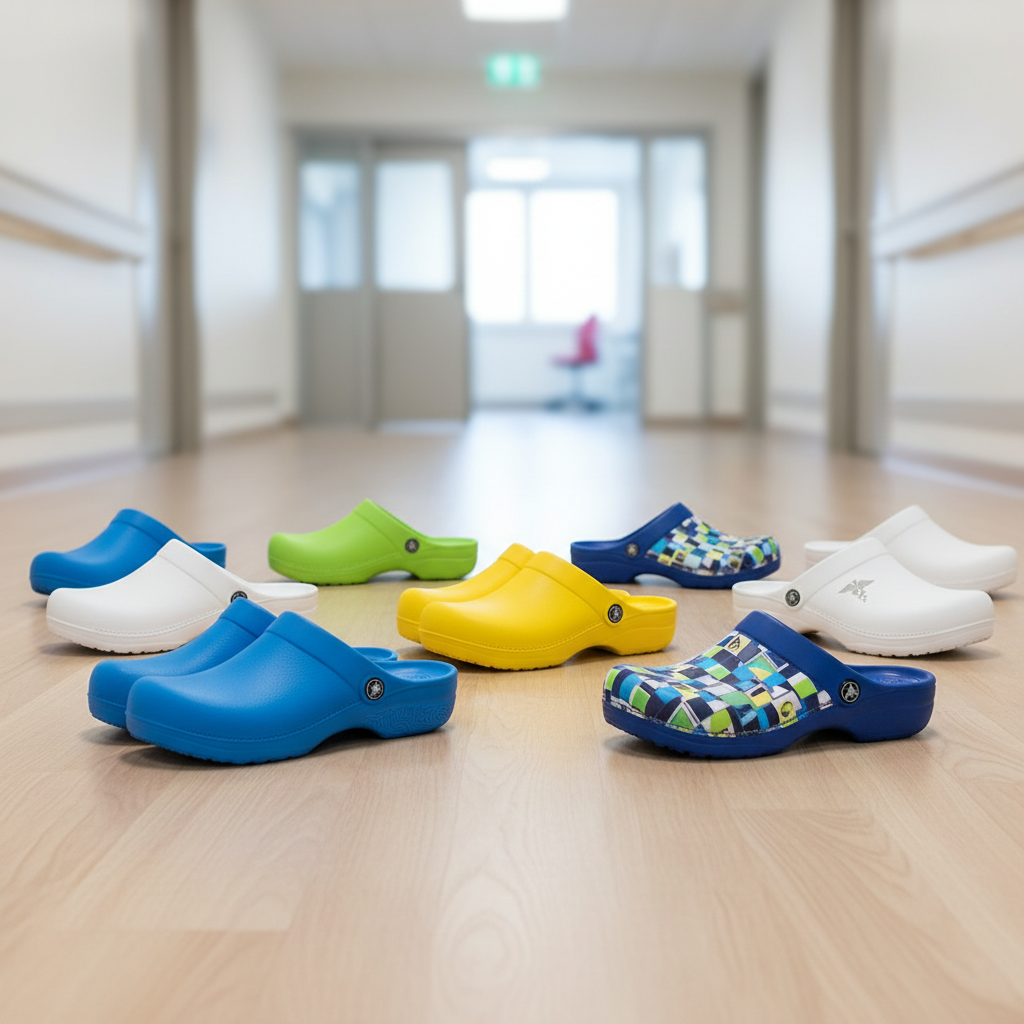
How many times have you finished a 12-hour shift feeling like your feet, back, and legs don't belong to you? It's a harsh reality, but unfortunately common for those who dedicate their lives to caring for others. The truth, often overlooked, is that the footwear you wear is as important as the stethoscope around your neck. Choosing the wrong footwear is not just a matter of momentary discomfort; it's a guaranteed ticket to long-term chronic injuries. If you are a nurse, doctor, auxiliary, or manage a clinic, this guide was written with you in mind. We will demystify everything about the world of hospital clogs and ensure that your next step is taken with safety and comfort.
Table of Contents
- 1. What they are and their importance
- 2. Main types of clogs
- 3. Safety standards and certifications
- 4. Criteria: Comfort and Ergonomics
- 5. Clogs for different areas
- 6. Design and professional image
- 7. How to get the right size online
- 8. Maintenance and disinfection
- 9. Comparison: Clogs vs Sneakers
- 10. Integration into uniforms
- 11. Common questions when buying
- 12. Conclusion and recommendation
1. What are nursing and hospital clogs and why they are essential
Often, when we think of hospital uniforms, the image that comes to mind is that of a white coat or surgical scrubs. However, the foundation of any healthcare professional—literally—lies in their footwear. Hospital and nursing clogs are not just comfortable shoes; they are Personal Protective Equipment (PPE) meticulously designed to meet the demands of a hostile and challenging work environment.
Imagine the scenario: you're rushing through corridors during an emergency, the floor might be wet with bodily fluids or cleaning products, and you have to be on your feet for the next 8 hours. Regular footwear simply won't do. Professional clogs are distinguished by their ability to protect the foot from spills, prevent falls with non-slip soles, and, crucially, support the bone and muscle structure to prevent extreme fatigue.
Historically, clogs evolved from ancient wooden clogs (thankfully, those days are long gone!) to modern engineering marvels made from advanced polymers. The reason they are essential transcends personal comfort. It's about workplace safety and hygiene. In a hospital, the ability to wash and sterilize footwear is vital to prevent cross-contamination. Common cloth sneakers are bacterial sponges; high-quality polymer clogs are a defensive barrier.
Furthermore, the impact on the professional's own health is undeniable. The continuous use of inappropriate footwear on hard hospital floors is the number one cause of problems such as plantar fasciitis, varicose veins, lower back pain, and knee joint issues among nurses and doctors. Investing in a quality pair is not a luxury; it's maintaining your most important tool: your body.
2. Main types of professional clogs for healthcare
Entering the world of Professional Footwear can be overwhelming given the variety of materials and designs. Not all are created equal, and what works for a clinic receptionist might be disastrous for a surgeon. Let's dissect the options.
EVA (Ethylene Vinyl Acetate) Clogs
EVA is that injected "foam" type material that made brands like Crocs famous, but in a professional context, the technology is far superior. EVA clogs are known for their extreme lightness. We're talking about footwear that weighs mere grams, which, after thousands of steps in a shift, makes a brutal difference in leg fatigue.
They are generally waterproof, easy to wash, and very comfortable. However, they have a downside: with time and intensive use, the material tends to compress and lose its cushioning capacity. Also, not all EVA can be autoclaved (only cold wash or up to 40-50 degrees, depending on the brand).
TR and Thermoplastic Rubber Clogs
If you're looking for durability and maximum sterilization, this is where you should focus your attention. Denser materials allow clogs to undergo autoclaving processes at high temperatures (generally up to 134°C). This is mandatory for operating rooms. They are slightly heavier than EVA clogs but offer superior protection against falling objects (like scalpels or scissors) and hot fluids.

Clogs with Holes vs. Closed Clogs
This is an old debate. Clogs with side or top holes allow for excellent ventilation, preventing excessive foot perspiration and fungal growth. However, in environments where there is a risk of fluid spills (blood, chemicals), holes are a dangerous entry point. The modern solution involves clogs with angled ventilation (so liquids drain without entering) or the use of technological insoles that absorb moisture in a closed model.
Clogs with Straps
The back strap is not just an adornment. In many hospitals, wearing the strap is mandatory to ensure the footwear does not come off in a rush or sudden movement. A loose clog is an imminent fall hazard.
3. Safety standards and certifications for hospital clogs
It's not enough to look like a hospital clog; it must be certified as such. When buying footwear for professional use, you should look for the CE marking and compliance with standard EN ISO 20347 (for work footwear without a protective toe cap against strong impacts) or EN ISO 20345 (safety footwear with a toe cap).
Within these standards, there are acronyms that seem like alphabet soup but save lives. If you want to delve deeper into this crucial topic, I highly recommend reading our article on non-slip hospital clogs: safety and standards, where we explore every detail.
Slip Resistance (Non-slip)
This is perhaps the most critical feature. Hospitals have linoleum or ceramic floors which, when wet, feel like ice rinks. The classifications are:
- SRA: Tested on ceramic with detergent.
- SRB: Tested on steel with glycerine.
- SRC: Passes both tests above (SRA + SRB). This is the gold standard you should look for in your professional clogs.
Electrical Properties (Antistatic vs ESD)
In a hospital environment, we deal with sensitive electronic equipment and, sometimes, flammable gases. The accumulation of static electricity on the body (the kind that gives you shocks when you touch a doorknob) can be dangerous.
Antistatic (A) footwear dissipates electrical charge to the ground, reducing accumulation. ESD (Electrostatic Discharge) footwear has even lower electrical resistance, being essential for those who handle very sensitive electronic equipment or work in precision laboratories.
4. Criteria for choosing nursing clogs: comfort, ergonomics, and injury prevention
We've talked about the rules, now let's talk about how it feels. Is comfort subjective? Not really. Ergonomics is a science. When you choose nursing clogs, you are choosing the base of your spine.
The heel should be slightly elevated compared to the toes (the so-called "drop"). This reduces tension in the Achilles tendon and helps with venous return circulation, preventing the feeling of heavy legs and the appearance of varicose veins. Completely flat clogs (like ballet flats) are terrible for long shifts.
Impact absorption is another key factor. Every step you take sends a shockwave through your skeleton. A good clog should have materials in the heel capable of dissipating this energy. If you often suffer from pain, you might want to consult our specific guide on the most comfortable nursing clogs for long shifts.

Additionally, consider the width of the fit. Swollen feet at the end of the day need space. A clog that squeezes the toes not only causes discomfort but can lead to ingrown toenails and bunions. Ideally, your toes should move freely within the toe box.
5. Clogs for different areas: nursing, doctors, auxiliaries, dentists, and veterinarians
Each specialty has its "pains" and needs. What works for one may not work for all.
Operating Room
Here, the keyword is sterilization. Surgeons and scrub nurses need clogs that can withstand autoclave cycles at 134°C. They must be antistatic (to avoid interfering with life support equipment) and closed or with low side holes to prevent entry of biological fluids. Green or blue color is common to reduce reflection from surgical lights.
General Ward and Auxiliaries
For those who walk miles a day in the corridors, lightness is the priority. High-density EVA hospital and nursing clogs or hybrid models (technical sneaker type) are excellent. The focus is on fatigue resistance.

Dental and Veterinary Medicine
Dentists spend a lot of time standing in the same position, requiring excellent arch support. Veterinarians, on the other hand, face extra challenges: animal hair, urine, and the need for quick movements to restrain four-legged patients. Closed clogs, without top holes (where hair can get in and prick), and easy to clean with a disinfectant wipe are ideal.
6. Design, colors and professional image in a hospital environment
Gone are the days when white was the only option. Today, design and color play an important psychological role. White still conveys purity and hygiene, but it is unforgiving with dirt. Navy blue and dry green are classics that better hide stains and convey serenity.
In pediatrics, for example, the use of colorful or patterned clogs can help break down the barrier of fear with children, making the professional more "accessible" and less intimidating. For private aesthetic or dental clinics, the color of the clogs can and should align with the brand's visual identity (branding). Black or burgundy clogs can give a much more sophisticated and premium look to the uniform.
7. How to get the size and fit right when shopping online
Buying shoes online scares many people. "What if it doesn't fit?". The truth is that buying professional clogs requires a slightly different approach than buying fashion sneakers.
Most professional clog brands, like WOCK, have very reliable size guides. Always check the measurement chart in centimeters. A rule of thumb for clogs: you should be able to fit an index finger between your heel and the back of the clog when your toes touch the front. The foot needs to "breathe" and expand inside the footwear.
8. Maintenance, cleaning, and disinfection of nursing clogs
The durability of your investment depends on how you treat it. And, more importantly, your health depends on the hygiene of your footwear.
- Autoclavable Clogs: They should be washed periodically in an autoclave, respecting the maximum temperature indicated by the manufacturer (usually 134°C). Always remove insoles if they are not autoclavable!
- EVA Clogs (Machine Washable): You can put them in the washing machine, but pay attention to the temperature! Never exceed 40°C or 50°C (check the label), as EVA can shrink and deform with excessive heat. Never, ever, put them in the dryer.
- Daily Cleaning: Wiping them with a disinfectant solution or 70% alcohol at the end of each shift is an excellent practice to avoid carrying hospital bacteria into your car or home.
9. Comparison: clogs vs professional sneakers vs wooden clogs
Still undecided? Let's lay our cards on the table and compare the most popular options on the market.
| Footwear Type | Advantages | Disadvantages |
|---|---|---|
| Polymer Clogs (e.g., WOCK) | Easy to clean/sterilize, durable, fluid protection, excellent support. | Aesthetics may not appeal to everyone, less flexible than sneakers. |
| Professional Sneakers | Sporty style, very light, secure fit with laces. | Difficult to sterilize (fabrics absorb fluids), laces can untie and accumulate dirt. |
| Traditional Clogs (Leather/Wood) | Leather durability, classic aesthetic. | Heavy, hard, noisy, difficult to disinfect properly. |
If you're looking for something that combines the best of both worlds (the look of a shoe and the comfort of a clog), you have interesting options like the model below:

10. How to integrate clogs into the team's complete uniform
Image matters. A well-uniformed professional conveys competence and trust to the patient. Integrating clogs into the uniform doesn't have to be complicated. The current trend is "color blocking" or complementary contrast.
If your team wears white coats, colorful clogs (electric blue, mint green, fuchsia pink) can liven up the uniform and help identify different departments (e.g., nurses in blue, assistants in green). If tunics and trousers are already colorful, white, black, or navy blue clogs maintain sobriety.
Don't forget to check if the clog style matches the cut of the trousers. Wider trousers (surgical scrub type) go well with any clog. Tighter or "slim fit" trousers work better with more elegant and less bulky clog models, or even with professional technical sneakers.
11. Common questions when buying hospital clogs in an online store
"Do white clogs turn yellow over time?"
Poor quality ones do, yes. High-quality professional polymer clogs have UV stabilizers that greatly delay this process. Still, regular cleaning is essential.
"Can I use my own orthopedic insoles?"
In most professional models, yes! The insoles that come with the clogs are usually removable, allowing you to insert your personalized insoles prescribed by a podiatrist.
"How long do they last?"
It depends on usage. With intensive daily use, annual replacement or every 18 months is recommended, not because they tear, but because the cushioning system loses effectiveness. If you start to feel back pain you didn't have before, it's time to change them.
12. Call-to-action: how to choose and buy the best clogs
Choosing the right footwear is an act of respect for yourself and your profession. Don't underestimate the impact a good pair of clogs can have on your daily life, your mood, and your physical health.
In our store, we have rigorously selected the best brands and models on the market, tested and approved by demanding healthcare professionals. From the indestructible WOCK for the operating room to the ultra-light options for consultations, we have the perfect pair for your feet.
Don't wait until you're in pain to act. Explore our complete collection of Professional Footwear now and give your feet the VIP treatment they deserve.