Waist Apron vs. Bib Apron: A Guide to Choosing for Hospitality
Index
- Introduction: The Perfect Uniform Dilemma
- The Bib Apron: The Professional's Shield
- The Waist Apron: Elegance and Agility
- Direct Comparison: Waist vs. Bib
- Analysis by Function: Who Should Wear What?
- Materials and Durability: The Deciding Factor
- Personalisation and Branding in Different Styles
- Final Criteria for Decision Making
Introduction: The Perfect Uniform Dilemma
Choosing professional uniforms goes far beyond aesthetics. In the hospitality industry, where every detail communicates the brand's essence and affects operational efficiency, the decision between a waist apron and a bib apron is strategic. It's not just about "covering clothes," but about providing the team with the right tool for the job, ensuring comfort, safety, and an impeccable presentation.
Many restaurant and hotel managers face this dilemma when refreshing their establishment's image or opening a new venue. Should we opt for full torso protection, or the classic elegance and speed of a waist-tied apron? The answer is not binary; it intrinsically depends on the tasks performed, the risk of soiling, and the message intended to be conveyed to the customer.
In this in-depth guide, we will explore all the nuances of these two fundamental pieces of professional clothing. We will analyse not only the technical functionality but also the ergonomic impact and customer perception, helping you make the most informed decision for your team, whether in a fine dining setting, a busy coffee shop, or an industrial kitchen. For an overview of all types, you can also consult our Complete Guide to Professional Aprons: Hospitality and Catering.
The Bib Apron: The Professional's Shield
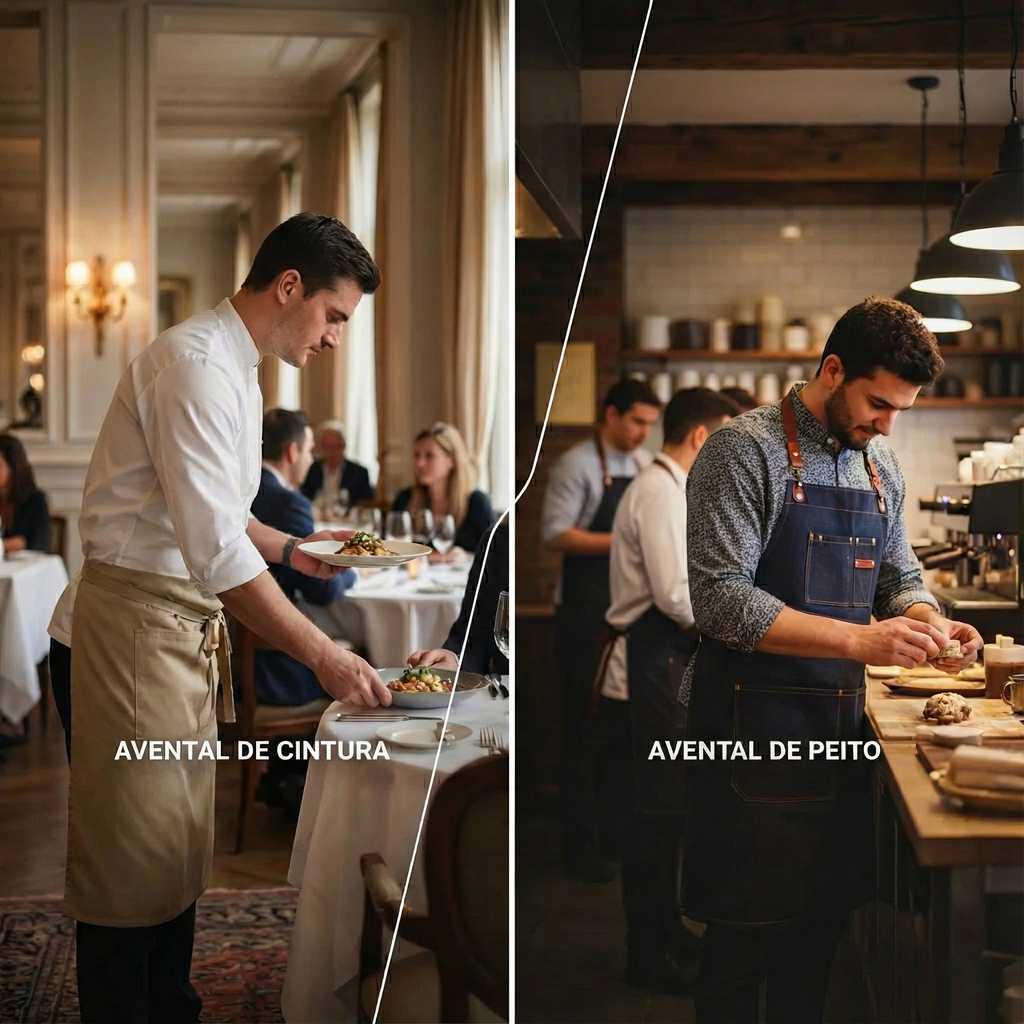
The bib apron, often associated with the iconic image of the chef or professional butcher, is the protective garment par excellence. Its defining characteristic is the coverage of the upper torso, usually fastened by a strap around the neck or by crossed straps at the back.
When Protection is a Priority
The primary function of the bib apron is to create a physical barrier between the worker and the elements they interact with. In environments where hot splashes, grease, flour, sauces, or chemical cleaning products are frequent, torso protection is non-negotiable.
In the kitchen, for example, a waist apron would leave the chef's jacket or shirt exposed to stains that, besides being unsightly, can be dangerous (like boiling oil). The bib apron protects vital organs from superficial thermal burns and keeps the under-uniform clean for longer, ensuring that if the chef has to go out into the dining room, they can remove the apron and present themselves impeccably.
Beyond the kitchen, this type is crucial for baristas and mixologists. Preparing espresso or vigorously shaking cocktails often results in chest-level splashes. A bartender wearing a vest or a white shirt will immensely benefit from the protection of a full apron. For more details on this niche, see our article on Aprons for Bar and Dining Room: Elevating the Customer Experience.
An excellent example of robustness and style in this category is the Demin Gil Bib Apron. The use of denim offers superior resistance to mechanical wear, ideal for fast-paced environments.

Bib Aprons and Visual Identity
Visually, the bib apron occupies a large area of "real estate" on the employee's body. This makes it an excellent canvas for branding. Embroidered logos on the chest are easily visible to customers, even behind a tall counter.
Psychologically, this type of apron conveys a message of "skilled manual labour." It is the uniform of the artisan, the creator. This is why many "farm-to-table" concept venues or specialty coffee shops opt for denim bib aprons, evoking a sense of rustic authenticity.
Ergonomics and Fastening Systems
A critical point in choosing bib aprons is the strap system. The traditional halter-neck model can cause cervical strain if the apron is heavy or if the pockets are loaded with tools (thermometers, corkscrews, notebooks).
For long shifts, the superior ergonomic solution is cross-back aprons. These distribute the apron's weight over the shoulders and back, completely relieving the neck. We discussed the importance of this aspect for occupational health in the article: Why Choose Cross-Back Aprons? | Ergonomics and Comfort.
The Waist Apron: Elegance and Agility
The waist apron, which covers only from the hip down, is historically associated with table service, speed, and a certain hierarchy in classic catering.
The Classic European "Bistro" Style
When we think of a waiter in a Parisian café or a traditional Portuguese restaurant, we almost immediately envision a long white or black apron, tied at the waist, falling almost to the ankles. This is the famous "Bistro" style.
The long waist apron confers an elongated and elegant silhouette. It conveys formality and respect for service protocol. It is the preferred choice for fine dining establishments and luxury hotels, where interaction with the customer is ceremonial. Additionally, the ample fabric surface on the legs protects trousers from accidental spills of wine or soup during tray transport.
The BISTRO APRON from our collection perfectly exemplifies this aesthetic: clean lines, extensive leg coverage, and a touch of timeless sophistication.

Mobility for Table Service
By eliminating the upper part, the waist apron allows for greater ventilation and freedom of torso movement. In a busy dining room, where staff need to stretch, turn, and move quickly between tight tables, the absence of fabric on the chest can offer a sense of greater lightness.
Furthermore, it allows the upper part of the uniform to stand out. If your establishment has invested in custom shirts, vests, or high-quality ties, the waist apron allows these elements to shine, rather than hiding them.
Length Variations and Utility
Not all waist aprons are long. There are important variations:
- Short: Often used in bars, pubs, or very informal cafés. Offers pockets for change and notepads, but prioritises speed and leg mobility.
- Medium (Mid-calf): A balance between protection and ease of movement, common in casual restaurants.
- Long (Bistro): Maximum leg protection and supreme elegance.
Direct Comparison: Waist vs. Bib
To facilitate the decision, let's deconstruct the fundamental differences in a comparative analysis.
Comparative Table of Features
| Feature | Bib Apron | Waist Apron |
|---|---|---|
| Protection | High (Torso and Legs) | Medium/Low (Legs only) |
| Image | Artisan, Robust, Informal or "Chef" | Classic, Table Service, Elegant |
| Pockets | Chest and Waist (Varied access) | Only in the waist/thigh area |
| Heat | Retains more body heat | Cooler, free torso |
| Uniform Highlight | Covers shirt/t-shirt | Allows shirt/vest/tie to be displayed |
| Adjustment | Requires strap adjustment (neck/back) | Simple waist tie |
| Common Sectors | Kitchen, Baristas, Dishwashing, Florists | Table Service, Sommeliers, Bartenders |
Safety and Hygiene Analysis (HACCP)
In the context of food hygiene and safety, the apron acts as a barrier. In areas of direct handling of raw food (kitchen), the bib apron is generally recommended or required, as it prevents bacteria from the employee's street clothes from passing to the food and vice versa. To learn more about this critical topic, read Hygiene and Food Safety: The Role of the Apron in the Kitchen.
The waist apron, on the other hand, is more suitable for the "clean zone" of service, where food is already plated and the risk of massive cross-contamination is lower. However, it should be changed frequently if soiled.
Analysis by Function: Who Should Wear What?
A "one-size-fits-all" approach rarely works for large teams. It is common to see establishments where the kitchen team wears bib aprons and the dining room team wears waist aprons. Let's analyse by function.
Chefs and Kitchen Staff
For the kitchen brigade, the choice is almost unanimously the bib apron.
- Why? Protection against heat, oil, water, and handling heavy loads.
- Material: Thick cotton or canvas for heat resistance, or waterproof materials for washing areas.
- Recommendation: Models with strategic pockets for tongs and thermometers, but designed not to accumulate debris. For kitchen leaders, invest in superior quality, as explored in Chef Aprons: Functionality, Protection, and Prestige in the Kitchen.
If you are looking for a sustainable and extremely durable option for your brigade, the Bib Apron with Reinforced Recycled Twill is a smart choice. The reinforcements ensure that high-stress areas do not give way, extending the life of the uniform.
 Bib Apron with Reinforced Recycled Twill 86x74 cm
Baristas and Bartenders
Here the line divides.
- Baristas (Coffee): Bib apron is preferable. Coffee grounds and steamed milk get very messy. A canvas or denim bib apron creates a modern "third wave coffee shop" look.
- Bartenders (Classic Cocktails): Often wear a waist apron or vest. If the bar is high-volume and "messy," a waist apron with waterproof fabric or leather can be a stylish option, but many modern "mixologists" are adopting bib aprons with "barber" style leather straps. See our collection of Bartender Aprons for inspiration.
Waitstaff and Sommeliers
- Waitstaff (Bistro/Fine Dining): Long waist apron. It is the etiquette norm. It allows the corkscrew and pen to be carried discreetly, maintaining an upright and elegant posture.
- Waitstaff (Casual/Burger/Tapas): Bib apron (often in bright colours or denim) or short waist apron. The bib apron here helps to uniform the team if the dress code underneath is casual (e.g., various t-shirts).
For the Sommelier, specifically, the waist apron is almost mandatory. The "tastevin" (wine-tasting cup) pin or corkscrew need to be accessible, and torso freedom is essential for tasting and decanting.
Cleaning and Dishwashing Teams
In the dishwashing area, aesthetics give way to pure functionality and impermeability. Water and chemicals are constantly being dealt with. Here, not even a regular fabric bib apron is enough. Waterproof aprons made of materials like PVC or polyurethane are necessary, and they must be bib aprons for full protection. Read more in Waterproof and Protective Aprons: Safety in Dishwashing and the Food Industry.
Materials and Durability: The Deciding Factor
Regardless of the cut (waist or bib), the material defines performance.
- Cotton: Breathable, elegant, but absorbs liquids and stains. Requires careful maintenance.
- Polyester/Blend: Retains colour, dries quickly, barely needs ironing. Ideal for high-turnover uniforms.
- Denim: Very fashionable ("bistronomy"). It is resistant, hides stains, and gains personality with washes, as detailed in our article on Denim Aprons and the New 'Bistro' Style.
- Leather: Premium, durable, heavy. Great for bartenders and grill masters, but requires specific care and can be hot.
To delve deeper into choosing the correct fabric, consult: Aprons, Materials and Fabrics: Cotton, Polyester or Waterproof for the Dishwashing Area?.
Personalisation and Branding in Different Styles
As mentioned, the apron is a marketing vehicle.
- On the Bib Apron: The logo is usually centred on the upper chest. It is the most visible spot in a face-to-face interaction.
- In a Waist Apron: Personalisation is more subtle. It can be done on one of the bottom corners or on a pocket. It is less "in-your-face," which aligns with luxury brands that prefer discretion.
An important aspect is that personalised aprons create a sense of belonging within the team. As we discussed in Personalised Aprons: The Importance of Branding in Uniforms, pride in wearing the jersey (or apron) is reflected in the quality of service.
Final Criteria for Decision-Making
To finalise your choice between a waist apron and a bib apron, go through this quick checklist:
- Risk of Soiling: High and above the waist? -> Choose Bib Apron. Low or only risk of spillage on the legs? -> Choose Waist Apron.
- Ambient Temperature: Very hot kitchen without air conditioning? A bib apron can increase heat stress, but it's necessary for safety. Consider lighter fabrics. In the dining room, a waist apron is cooler.
- Formality: Is your space casual and rustic? -> Bib Apron in Denim or Canvas. Is it classic and refined? -> Long Waist Apron.
- Pockets: Does your team use tablets for orders? Mobile payment terminals? Make sure the chosen apron (whatever the type) has reinforced and adequately sized pockets.
- Maintenance: Bib aprons accumulate more visible stains. Be prepared for rigorous washing routines. See our tips in Apron Maintenance: How to Remove Tough Stains.
The right choice balances your brand's identity with your team's well-being. At RAG Tailor's, we offer a wide range of Professional Kitchen and Hospitality Aprons designed to meet all these specific needs. Explore our catalogue and find the perfect match for your business.